
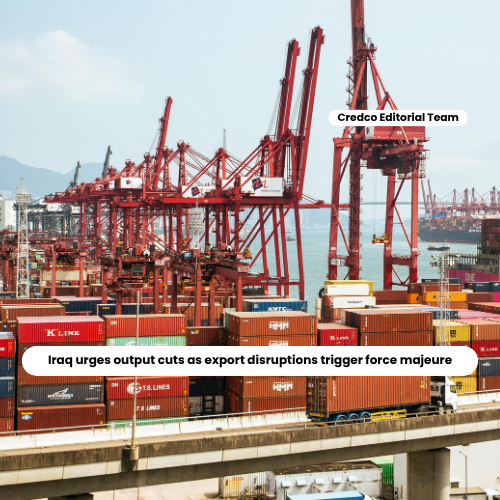
The disruption has effectively cut off access to around 3.4 million barrels per day of export capacity through Basrah, following the near halt of tanker transit via the Strait of Hormuz. The oil ministry stated that crude storage has reached maximum capacity, necessitating a scale-back in production across fields operated by foreign companies.
Officials indicated that efforts are underway to restore exports, but acknowledged that the situation remains highly uncertain. By invoking force majeure retroactively from March 3, Baghdad can suspend revenue and production-sharing obligations with international operators.
In response to the crisis, Iraq has reduced its own crude production to around 1.5–1.6 million barrels per day to prioritize domestic refining and electricity generation, although some estimates place output closer to 1.2 million barrels per day.
Meanwhile, Iraq has resumed limited exports from its northern Kirkuk fields via Turkey’s Ceyhan port, with initial volumes of about 250,000 barrels per day starting March 18.
Production in the Kurdistan region has already been impacted, with international oil companies halting operations following repeated missile and drone attacks on energy infrastructure by Iran-aligned militia groups after the escalation of conflict involving the US and Israel at the end of February.
Stay ahead of market trends with the Credco app. For any queries, please reach out via WhatsApp at +91 8448083211.