
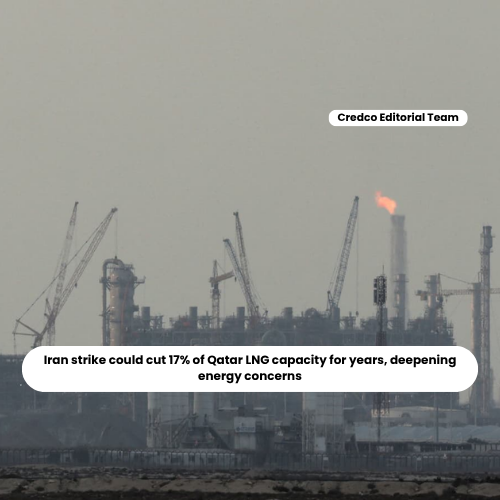
QatarEnergy CEO Saad al-Kaabi confirmed that two of the country’s 14 LNG trains, along with a gas-to-liquids (GTL) facility, were hit in the attack. The damage has taken approximately 12.8 million tonnes per year of LNG production offline and forced the company to declare extended force majeure on long-term supply contracts to Europe and Asia.
The assessment follows the immediate market reaction seen after the strike, when crude oil prices jumped and European gas markets rallied sharply. Dutch TTF gas futures surged above €64/MWh and briefly approached €70/MWh, reflecting growing fears over disruptions at the world’s largest LNG export hub.
The financial impact is also expected to be substantial. Qatar could face around $20 billion in lost annual revenue due to the outage, with additional declines anticipated across related energy exports. Condensate shipments may drop by about 24%, LPG exports by 13%, helium output by 14%, and both naphtha and sulphur exports by roughly 6%.
The affected LNG trains include units with participation from ExxonMobil, while the damaged GTL facility involves Shell. In addition, development work on Qatar’s North Field expansion has been halted and could be delayed by more than a year.
Authorities indicated that full restoration of production will depend on the stabilization of the regional situation, suggesting that the impact on global energy supply could persist for an extended period.
Stay ahead of market trends with the Credco app. For any queries, please reach out via WhatsApp at +91 8448083211.